Can case stackability be customised for a specific piece of equipment?
Partly, and the line falls exactly where the tooling does. Whether one shell locates squarely on another is decided by the stacking rim, the lid and base depths and the wall thickness of that shell — all of them features of the mould, not features of the order. What can be customised for a specific piece of equipment without touching the tool is the choice of shell — 136 of our 155 catalogue models are published as stackable — the wall thickness and depth recorded for the chosen model, the foam layout that carries the equipment, and colour, logo or hardware at 300 pieces on an existing mould with a forty-five day first article. Changing the rim, the footprint or the corner geometry is a new mould: 125 days, minimum order from 3,000 pieces per component. One limit applies to every option: no model in the catalogue publishes a stack load figure, that field is recorded as not measured, so a column that carries heavy equipment or a long span is engineered from the published geometry and agreed order by order rather than read off a table.
Key points
- Stackability is a moulded property: the rim, the lid and base depths and the wall thickness come from the tool, not from the order line.
- One hundred and thirty-six of our 155 catalogue models are published stackable; the 19 T Series shells have wheels and are not, so they travel on their own deck.
- Choose the model whose published external footprint already suits your rack and pallet, then customise the foam rather than the shell.
- Colour, logo and hardware changes run from 300 pieces on an existing mould, with a forty-five day first-article lead time.
- A new mould that changes rim or footprint geometry takes 125 days and starts at 3,000 pieces per component.
- No model publishes a stack load figure, so a column carrying heavy equipment is designed from published wall and depth data and agreed case by case.
What customising stackability actually means
Buyers usually ask the question in one of three forms, and the answer differs for each. The first is selection: can a case that stacks be found for this particular instrument? Almost always yes, because the catalogue is built from moulded shells rather than from one-off fabrication, and because 136 of the 155 models are specified stackable. The second is adaptation: can a shell we already mould be made to stack better for one item? Within limits, by changing wall thickness where the model offers it, by choosing a shallower lid, or by removing hardware that stands proud. The third is redesign: can the rim itself be reshaped? That is a tooling decision, and it is a different order with a different timeline and a different minimum.
The distinction matters commercially because it decides who pays for what. Selection and adaptation are handled inside a normal wholesale or OEM order. Redesign is a mould programme: new steel, a longer lead time, and a quantity commitment measured in thousands. Most equipment cases that stack well in the field are the result of the first two routes, not the third.
The three moulded features that decide whether a shell stacks
Rim and depth geometry. A stackable shell carries the case above it on a rim, and the useful number is how deep that locating path is. Across the catalogue we publish lid depth on 100 models, from 16 mm to 320 mm, and base depth on the same 100 models, from 15 mm to 168 mm. Among the stackable group the published lid depths run from 16 mm to 230 mm with a median of 85 mm, and base depths from 15 mm to 149 mm with a median of 41 mm. A shallow lid of 16 to 20 mm on the small 0 Series shells still locates a column, because the plan is square and the wall carries the load; a deep lid on a large shell is what lets an empty stack sit tight over many units.
Wall thickness. This is the published figure to compare between models, because it is the load path. We record wall thickness on 148 of the 155 models, spanning 2.0 mm to 6.0 mm, with a median of 3.9 mm across the catalogue and 3.7 mm within the stackable group. Small shells sit at the thin end: the KX 1204 at 120 x 90 x 40 mm external is 2.6 mm, while the KX 2005 and KX 2305 are both 2.0 mm. Larger shells sit higher, and the thickest published wall in the range is 6.0 mm.
Footprint discipline. A stack is only stable if the unit above lands on the same lines as the unit below. The catalogue carries 96 distinct external footprints across 155 models, and the most common plans repeat for a reason: 405 x 325 mm appears on seven models and 463 x 370 mm on seven more. The 315 x 260 mm plan is the clearest example of a family built to stack and palletise together — the KX 3207, KX 3213 and KX 3218 share that plan at 70, 128 and 180 mm external height, with the same 308 x 230 mm internal width, so a column of mixed depths still presents one flat, square surface.
What can be customised for your equipment, and what needs a new mould
| Change | What It Sets | Published Basis | Order Position |
|---|---|---|---|
| Model selection from the stackable group | Rim geometry, footprint, wall thickness, stackable flag | 136 of 155 models published stackable; external and internal dimensions per model | No tooling, no surcharge; standard minimum is one unit |
| Foam layout and insert depth | How the equipment is held; nothing on the stacking path | Custom foam offered on every model; foam thickness chosen from the lid and base depths | Minimum one unit; fits inside the forty-five day existing-mould programme |
| Colour, logo, labelling | Identification and warehouse routing, not the stack itself | Offered across the range; shell materials published as PP, engineering PP and ABS | Three hundred pieces minimum on an existing mould |
| Hardware choice: latches, handle, pads | Whether anything stands proud of the rim and breaks a flat bearing line | Hardware configuration published per model; padlock-ready latch bodies recorded | Three hundred pieces minimum; discussed at sample stage |
| Rim shape, footprint, corner geometry | The stacking behaviour itself | New tool required; existing published footprints remain the cheaper option | One hundred and twenty-five days, minimum 3,000 pieces per component |
| Wheels and telescopic handle | Mobility, at the cost of the stackable flag | All 19 wheeled T Series shells are published without stackability | Not offered on a stackable shell; choose the deck route instead |
How to specify stackability for one piece of equipment
Start from the item, not from the case. Record the equipment mass and its three dimensions, then add the clearance you want and the foam thickness you expect to need; that gives the internal requirement, and the model follows from the published internal dimensions. Only then does the stacking question get answered, because the answer is a relationship: how many of this model will sit in a column, will the column be empty or loaded in transit, and what is the deck or rack height it has to fit inside.
Write those four numbers into the request — units per column, loaded or empty, target stack height, and the handling path between warehouse and end use. That is enough for us to shortlist models by published wall thickness and depth, and to say plainly where a shortlisted option is at the thin end of the range. Where a column has to carry mass we cannot support from published geometry, we will say so rather than invent a figure, and propose either a shorter column, a shallower lid, or a different plan size.
Where a customised stack earns its keep
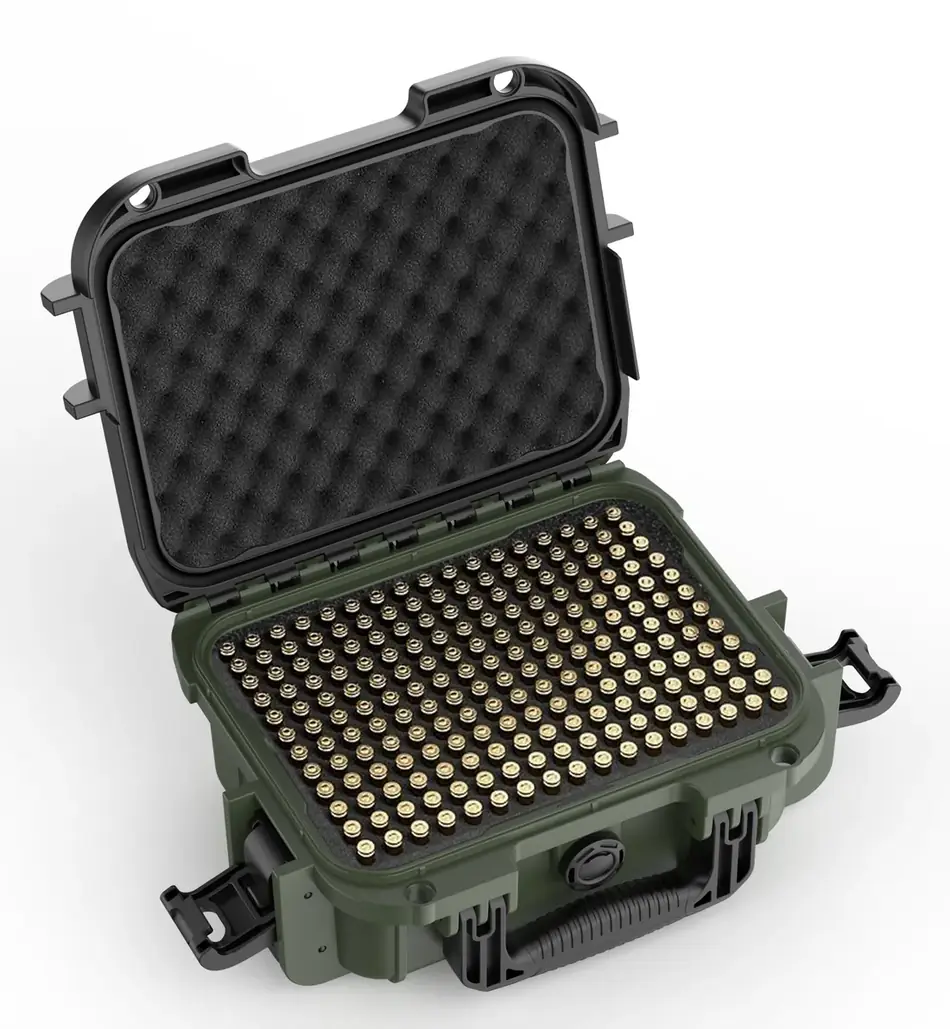
In electronics and instrumentation programmes, small shells of the 195 x 170 mm and 230 x 180 mm class travel in the tens per carton and are racked by the column; a shallow 20 mm lid and a 2.0 mm wall are entirely workable because the plan is small and the column short. In field-equipment and communications kits the constraint inverts: the shells are deep, the column is limited by handling mass, and locating squarely matters more than wall thickness. For ammunition and inventory transport the 315 x 260 mm family is the usual answer, because three heights share one plan and one pallet pattern serves the whole kit range. Industrial and telecommunications buyers most often ask for colour and labelling rather than any change to the shell, so a warehouse can read a stack without unstrapping it.
What we do not publish about stacked loads
The catalogue records a stack load field for every model, and for all 155 models that field is recorded as not measured. We therefore do not print a kilogram figure for any shell, and we do not translate wall thickness into a compression rating. Anyone quoting you a stack load for a case should be asked which laboratory produced it, at what humidity, with what foam inside, and over what duration, because a moulded polypropylene shell behaves differently under a forty-day warehouse column and a two-day transit one. If your programme requires a stated figure, tell us the column height, the mass above and the duration; we will quote accredited third-party testing against that specification and publish the report with the model rather than guessing at it in a catalogue line.
The same caution applies to a claim that looks harmless — that a case is stackable because it is strong. Stackability is geometry plus wall thickness plus a flat bearing line. A thick wall on a shell with a rounded rim still sheds sideways, which is how stacks come down in transit.
Commercial terms for a stackability programme
KeXin New Materials (Guangdong) Co., Ltd. works on a wholesale and OEM basis only, quoted EXW or FOB from the factory, with a thirty percent deposit and the balance before shipment. We do not sell retail, we do not deliver DDP, and we have no overseas warehouse, so a stacking plan that depends on regional stock has to be built into your own order rhythm. Existing-mould OEM runs forty-five days to first article with a 300-piece minimum for colour, logo or hardware; a new mould runs 125 days with a minimum of 3,000 pieces per component. Foam layouts and model selection start at one unit, which is why most stackability problems get solved that way first.
Customisation
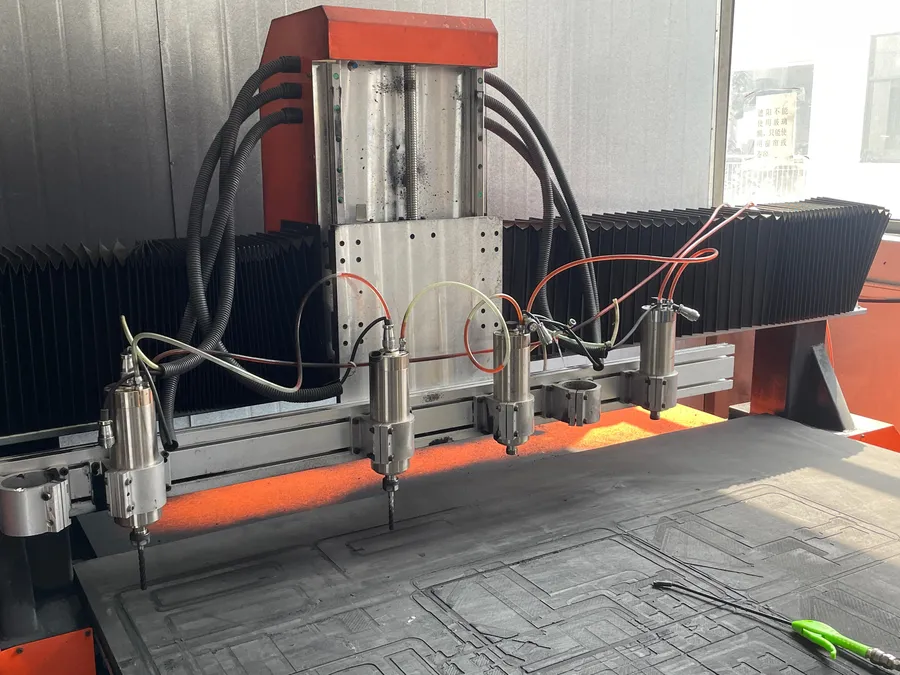
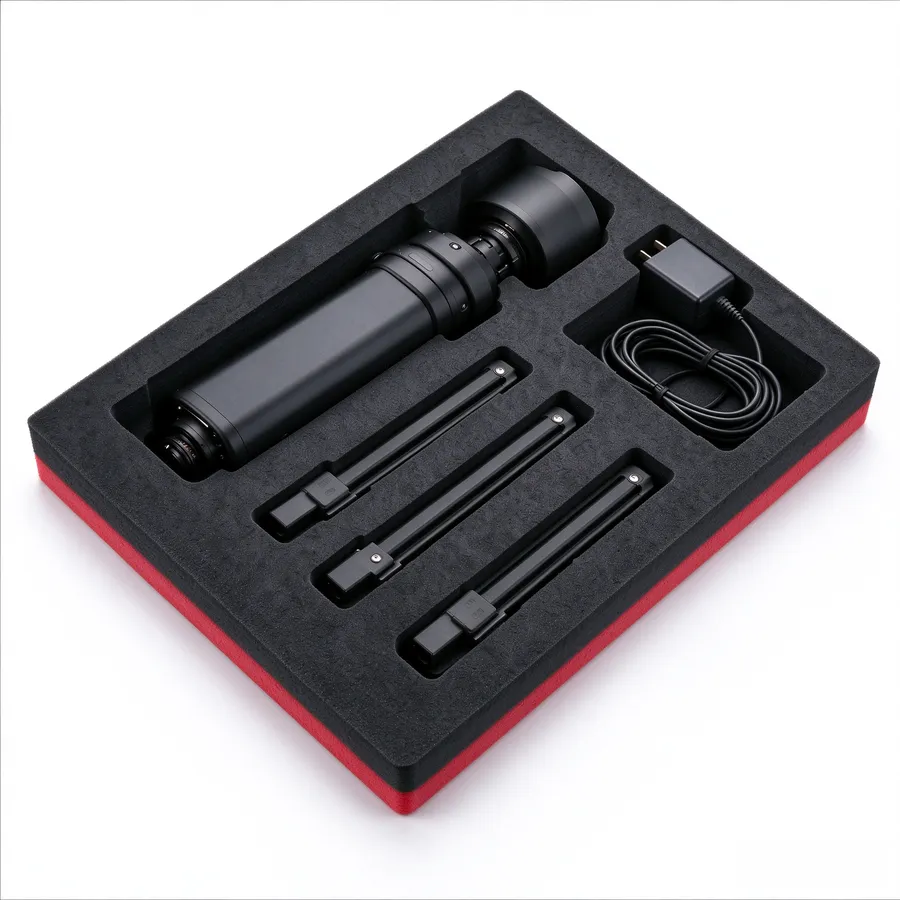
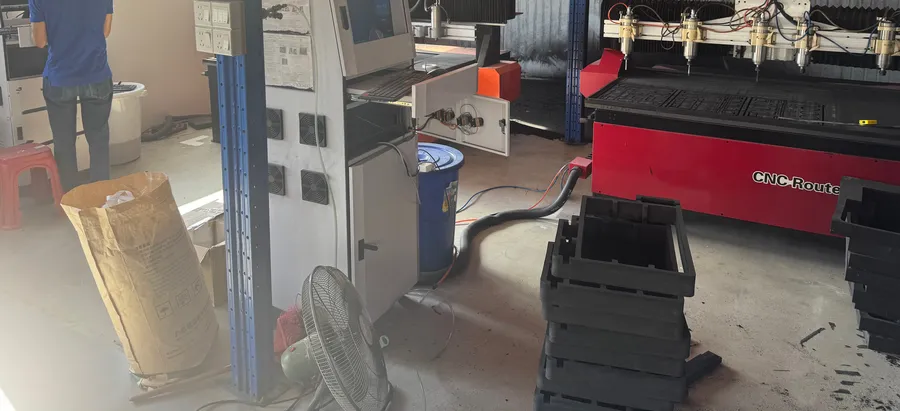
Everything described above is configurable on a standard shell: interior layout (pick-and-pluck, die-cut or CNC-cut), foam grade and thickness, colour, logo method, latch and lock count, pressure-equalisation valve, cable ports, document holder and identification plate. A bespoke exterior geometry requires a new mould — 125 days, from 3,000 units per moulded component.
Procurement considerations
| Question | What to send us |
|---|---|
| Which shell fits? | Equipment L × W × H as packed, plus required clearance per axis |
| What does it cost? | Order quantity and estimated annual quantity — the two drive different answers |
| Is tooling needed? | Whether an existing shell clears the envelope with usable foam depth |
| Lead time? | Your required delivery date, not just the order date |
| Certification? | The exact standard your tender names — we will say whether we can test to it |
| Freight? | Destination and preferred terms; carton and pallet data supplied with the quotation |
Comparison and selection guide
The tables on this page exist because a protective case is chosen by comparing three things: the envelope, the environment and the handling chain. Where no table applies, the rule below is.
| Situation | What To Do |
|---|---|
| Fastest | Standard shell plus CNC foam — typically 45 days from approved drawing. |
| Branded | Standard shell plus custom colour and logo — MOQ applies to the resin colour. |
| Bespoke geometry | New mould — 125 days, MOQ from 3,000 units per component. |
- Size on internal dimensions plus clearance, never on a product name.
- Choose the carrying method before the shell: it changes the series, not just the price.
- Specify the interior last, and decide up front whether the end user will reconfigure it.
Can case stackability be customised for a specific piece of equipment? relates to Logistics & Packing Guide. Related families: Custom Protective Cases / Tactical Equipment Cases / Ammunition Storage & Transport Boxes / Military Protective Cases / Outdoor Protective Cases / Electronics Cases. Related sectors: field and industrial equipment. Continue in the Logistics & Packing Guide cluster.
This page is written from our own production data. If your requirement differs, send the dimensions and we will tell you which of the 155 models fits, or whether a custom route is needed.