Can case weight be customised for a specific piece of equipment?
Yes, and in most enquiries it is done without tooling. Case weight can be customised for a specific piece of equipment along three routes: select a published shell whose mass already fits the load budget, change the interior and the hardware fitted to that shell, or - only where a mass ceiling genuinely cannot be met on an existing mould - specify a new mould. Our published specification file states net weight for 93 of 155 models, from 100 g on KX-1204 (120 x 90 x 40 mm external, 2.6 mm wall, PP) to 15,320 g on KX-88442 (843 x 592 x 415 mm external, 5.0 mm wall, PP, wheeled). The 62 large 8-series models carry no published net weight and are quoted against your configuration rather than guessed. What we will not do is promise a mass figure before the equipment envelope, the foam layout and the hardware list are fixed, because case weight is an output of those three decisions, not an input to them.
Key points
- Send a mass ceiling for case plus device together; a target for case weight alone cannot be engineered against, because the interior is part of the answer.
- Net weight is published for 93 of 155 models, from 100 g on KX-1204 to 15,320 g on KX-88442; the 62 large 8-series models are quoted per configuration.
- Extra depth costs surprisingly little: KX-2811 to KX-92817 is 54 mm more external height and 50 g more published net weight at the same 280 x 225 mm footprint.
- A thinner published wall is not a lighter case: KX-4716 at 2.5 mm publishes 1,680 g while KX-4616 at 3.0 mm publishes 1,395 g, because the moulds differ.
- Normalise before comparing: published mass per litre of internal volume runs from 61 g/L on KX-4616 to 388 g/L on KX-62205, so size alone predicts nothing.
- Weight work on an existing mould fits the 45-day OEM sample route; only a new mould at 125 days changes the shell, with MOQ from 3,000 units per component.
Three routes to a target case weight, and which one your equipment needs
The question a buyer usually asks is phrased as a specification request - can you make the case weigh a certain amount for my instrument - and the honest answer is that we can move the resulting mass along three separate routes with three different lead times and three different costs. Route one is selection. Our catalogue publishes external dimensions, internal dimensions, wall thickness, shell material, net weight and internal volume for each model, so a device envelope plus a foam allowance can usually be matched to a shell that already sits inside the load budget. Route two is configuration on an existing shell: the interior layout, the hardware set, whether a seal groove and gasket are fitted, whether wheels and a telescopic handle are specified. This is where most of the practical reduction happens, and it does not need tooling. Route three is the shell itself - a different mould geometry - and that is the only route where the mass is designed rather than chosen. The reason the routes matter is that case weight is an output. Wall thickness is drawn to reach a stiffness the equipment needs; a 1.2 kg handheld instrument and a 12 kg radio with a battery pack do not ask the shell for the same thing. Fix the equipment first, then read the mass.
What our published figures actually cover, model by model
Every row below is a real published line from our product specification file, not a representative average. The g/L column is arithmetic we have done in front of you: published net weight divided by published internal volume. It is included because it is the only column that lets two different moulds be discussed in the same sentence.
| Published Model | External Mm | Internal Mm | Wall Mm | Shell Material | Published Net Weight | Internal Volume | Mass Per Litre | Wheels |
|---|---|---|---|---|---|---|---|---|
| KX-1204 | 120 x 90 x 40 | 115 x 78 x 32 | 2.6 | PP | 100 g | 0.3 L | 333 g/L | No |
| KX-2005 | 195 x 170 x 46 | 190 x 135 x 40 | 2.0 | PP | 175 g | 1.0 L | 175 g/L | No |
| KX-2614 | 255 x 245 x 135 | 240 x 200 x 120 | 2.2 | PP | 460 g | 5.8 L | 79 g/L | No |
| KX-2811 | 280 x 225 x 111 | 253 x 180 x 98 | 5.0 | PP | 890 g | 4.5 L | 198 g/L | No |
| KX-92817 | 280 x 225 x 165 | 253 x 180 x 152 | 5.0 | Engineering PP | 940 g | 6.9 L | 136 g/L | No |
| KX-4616 | 460 x 367 x 155 | 455 x 338 x 148 | 3.0 | PP | 1,395 g | 22.8 L | 61 g/L | No |
| KX-4716 | 466 x 387 x 162 | 458 x 345 x 150 | 2.5 | Engineering PP | 1,680 g | 23.7 L | 71 g/L | No |
| KX-62205 | 222 x 128 x 50 | 200 x 98 x 41 | 3.5 | ABS | 310 g | 0.8 L | 388 g/L | No |
| KX-65522 | 545 x 440 x 215 | 507 x 385 x 190 | 5.3 | ABS | 4,860 g | 37.1 L | 131 g/L | No |
| KX-6621 | 662 x 495 x 210 | 587 x 434 x 192 | 6.0 | Engineering PP | 6,420 g | 48.9 L | 131 g/L | No |
| KX-85021 | 495 x 370 x 210 | 437 x 308 x 164 | 4.5 | Engineering PP | 4,912 g | 22.1 L | 222 g/L | Yes |
| KX-88434 | 843 x 592 x 335 | 740 x 518 x 284 | 5.0 | PP | 14,030 g | 108.9 L | 129 g/L | Yes |
| KX-88442 | 843 x 592 x 415 | 740 x 518 x 364 | 5.0 | PP | 15,320 g | 139.5 L | 110 g/L | Yes |
Same footprint, different case weight: four matched pairs from the file
The four comparisons below are the ones we use internally when a buyer tries to predict mass from a photograph, because each one breaks a different false rule. First pair, same footprint: KX-2811 and KX-92817 are both 280 x 225 mm in plan. The second is 54 mm taller and publishes 50 g more net weight, which is roughly six per cent. Depth is cheap; that surprises people. Second pair, same series label but different construction: KX-2811 publishes 890 g at a 5.0 mm wall and KX-2813 publishes 800 g at 2.8 mm, yet KX-2813 is the larger box by 1.6 litres of internal volume. Thinner wall plus a different mould equals a lighter, roomier case. Third pair, the one that stops the wall-thickness argument dead: KX-4616 at 3.0 mm publishes 1,395 g and KX-4716 at 2.5 mm publishes 1,680 g. The thinner shell is 285 g heavier, because the two are different moulds with different rib layouts, latch counts and lid-to-base depth splits (74/74 mm against 75/75 mm). Fourth pair, the big ones: KX-88434 and KX-88442 share an 843 x 592 mm footprint and a 5.0 mm wall, and the 80 mm of extra height costs 1,290 g. The same dimensional axis therefore moves the scale by 50 g on one mould and 1,290 g on another, which is exactly why a mass target has to be tied to a specific model or a specific new tool, never to a size class.
The parts of the weight you can order on and off
Once a shell is chosen, four configurable items move the delivered mass, and our file records which models offer them. Wheels and a matching telescopic handle are available on 19 of the 155 models; both add hardware, and both change what the case is used for, so they are a duty decision before they are a weight decision. A seal groove with gasket is recorded as available on 124 models and absent on the rest; the elastomer is a small share of the total but it is real, and where a mass ceiling is tight we quote the configuration with and without it. Stackability is recorded on 136 models, and stackable shells trade rim and lid geometry against handling, which affects how many units a person moves at once rather than what one case weighs. Interior is the largest single variable that is not our shell: die-cut or CNC-cut foam sits between the published net weight of the case and the mass your operator actually lifts, and for custom foam on an existing shell our published MOQ starts at 1 unit, which is why we settle the interior by sample rather than by tooling.
A practical note on how to read this: published net weight is the empty shell as moulded and assembled. It does not include your equipment, your cable set, your foam, or your packing. When we say a configuration is lighter, we mean the shell and the hardware we fit to it.
How to specify a mass target so the answer is usable
A request that says only make it light produces a quotation, not a solution. The specification that works tells us four things in one message. One: the mass ceiling and what it is a ceiling for - lift and carry by one operator, a case-plus-device total that has to stay under a ticket allowance, a per-carton limit in your own freight contract, or a payload on a platform. Two: the equipment envelope with its own mass, because the stiffness the shell needs is set by what it carries and where the load sits. Three: the handling duty, because a case that is dragged across a ramp and a case that lives on a shelf are not the same construction, and the difference is grams. Four: the interior, since a pick-and-pluck layout and a moulded tray are different masses and both can be fitted to the same shell. With those four lines we can answer in one of three registers: here is a published model that already fits, here is a configuration of a published model that fits, or here is what a new mould would take and cost. Anything vaguer than that gets answered with questions, and the questions are the delay.
Where case weight becomes the binding constraint
In wholesale and OEM work the mass ceiling usually arrives from one of four places, and each one points at a different part of our data. Freight and carton handling point at the packing columns: our file records carton dimensions and pieces per carton, and where both a published net weight and a pieces-per-carton figure exist - 58 models - the shells-only mass per carton is plain arithmetic. Below are four examples computed from published numbers, which deliberately excludes the carton itself, the dividers and any interior. Field carrying points at the empty shell figure plus the device, and is where the 222 g/L on KX-85021 versus the 61 g/L on KX-4616 stops being trivia and starts being a decision. Payload or mounting on a platform points at the whole assembly, where the case is a fixed tax and the interior is not. Per-unit landed cost points at volumetric weight rather than actual weight, which is why the external dimensions belong in the same conversation as the net weight, not in a separate one. If you tell us which of the four is binding, we will quote against it; if you do not, we will quote the case and you will discover the constraint at your own goods-in.
| Published Model | Published Net Weight | Pieces Per Carton | Carton Mm | Shells-Only Mass Per Carton |
|---|---|---|---|---|
| KX-2005 | 175 g | 40 | 410 x 360 x 495 | 7.00 kg |
| KX-2805 | 340 g | 32 | 570 x 470 x 435 | 10.88 kg |
| KX-3207 | 570 g | 24 | 645 x 530 x 430 | 13.68 kg |
| KX-707 | 1,360 g | 8 | 735 x 480 x 595 | 10.88 kg |
| KX-65522 | 4,860 g | 3 | 565 x 450 x 665 | 14.58 kg |
| KX-6621 | 6,420 g | 3 | 665 x 500 x 650 | 19.26 kg |
Customising case weight on commercial terms
Weight work is quoted on the same terms as the rest of our OEM and wholesale programme, and the lead time depends on which of the three routes the target needs. On an existing mould - interior layout, hardware set, seal option, colour, logo - first sample is 45 days from confirmed drawing and deposit; the published minimum is 1 unit for standard listings and custom foam and 300 units for a logo, colour or OEM programme. If the mass ceiling cannot be met on an existing shell and a new mould is required, the quotation is 125 days with MOQ from 3,000 units per component, which is why we always try to settle a weight target with a foam sample and a published model before proposing tooling. Payment is 30 per cent deposit with the balance cleared after inspection and before container loading. We quote wholesale and OEM on EXW or FOB from Guangdong only; there is no retail channel, no DDP quotation and no overseas warehouse. Third-party inspection and on-site factory audit are welcome by appointment, and accredited testing of any performance figure is quoted per configuration as a separate work package. Talk to Fred Zhao or the KeXin Sales Team on WhatsApp +86 135 3588 0002 with the four specification lines above and you will get a model number, not a brochure.
What we do not publish about case weight
Four gaps are worth stating before you plan around a number. First, gross weight is recorded for none of the 155 models in our file: we publish net weight of the shell and we publish carton dimensions, but the packed mass of a carton is not a figure we state, because it depends on dividers, interior and packing you have not yet specified. Second, 62 models in the heavy-duty large 8 series have no published net weight at all. We will not infer one from the neighbouring sizes; those are quoted against your configuration. Third, this data set carries no performance figures of the kind buyers often ask about alongside weight. Protection classes, drop heights, standard references and similar claims are recorded as not measured in our product data, and we do not print a value we cannot show you a record for; accredited testing can be commissioned per configuration as a separate work package. Fourth, no comparison in this page is a ranking. Nothing here is presented as the lightest case available anywhere, and nothing is presented as a third-party conformity result - every figure is a published line from our own specification file, checked against the model you order, per model published.
Customisation
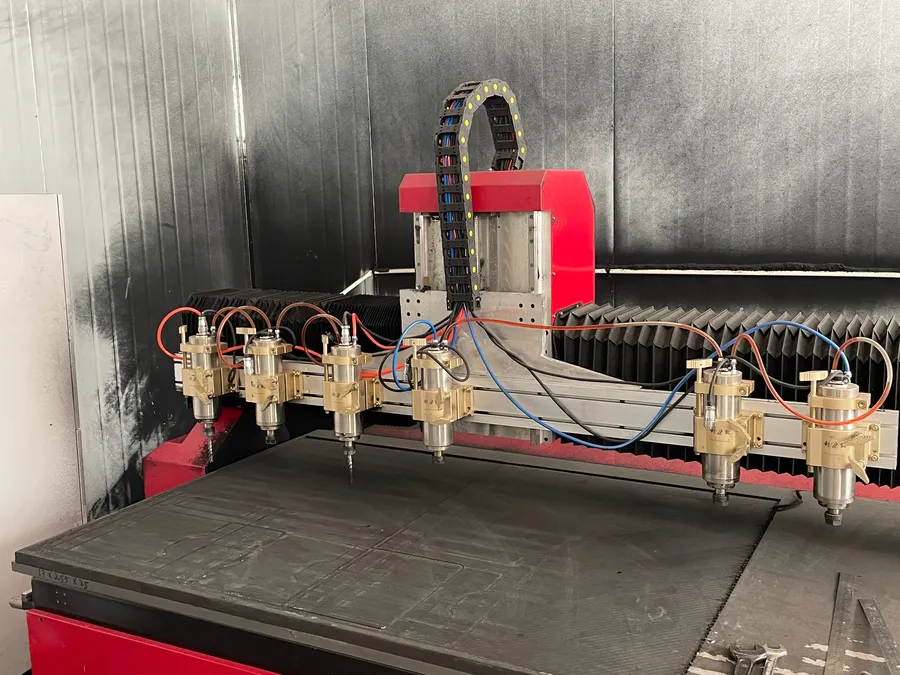
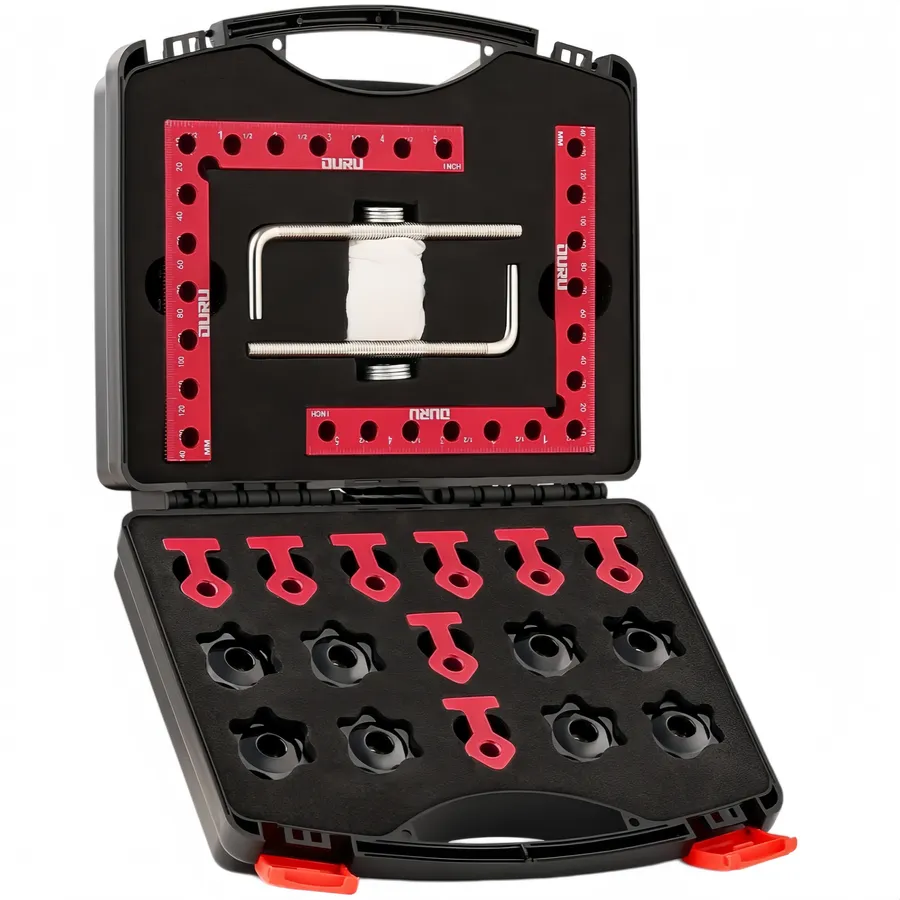
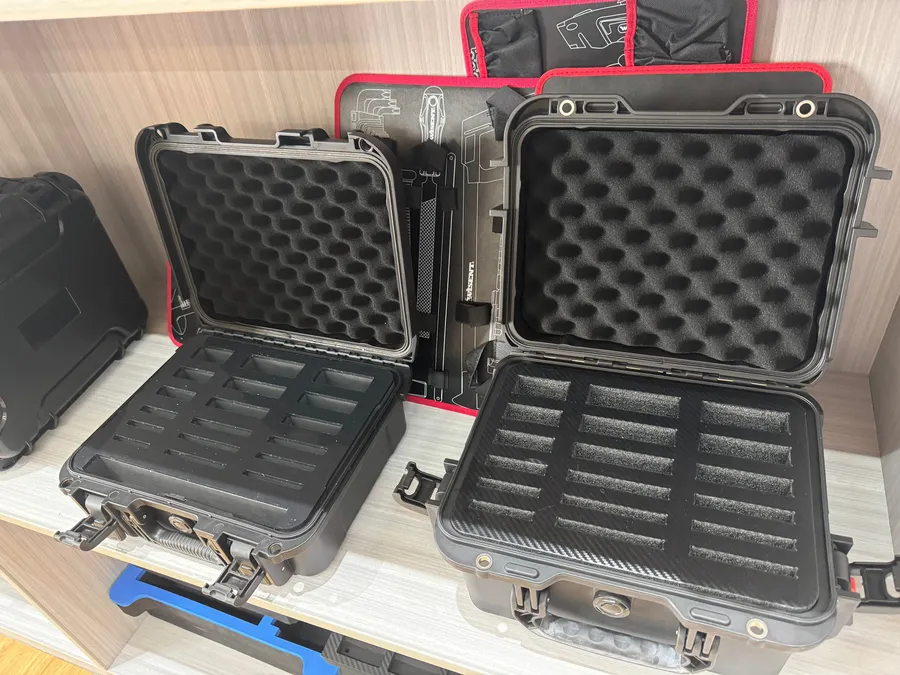
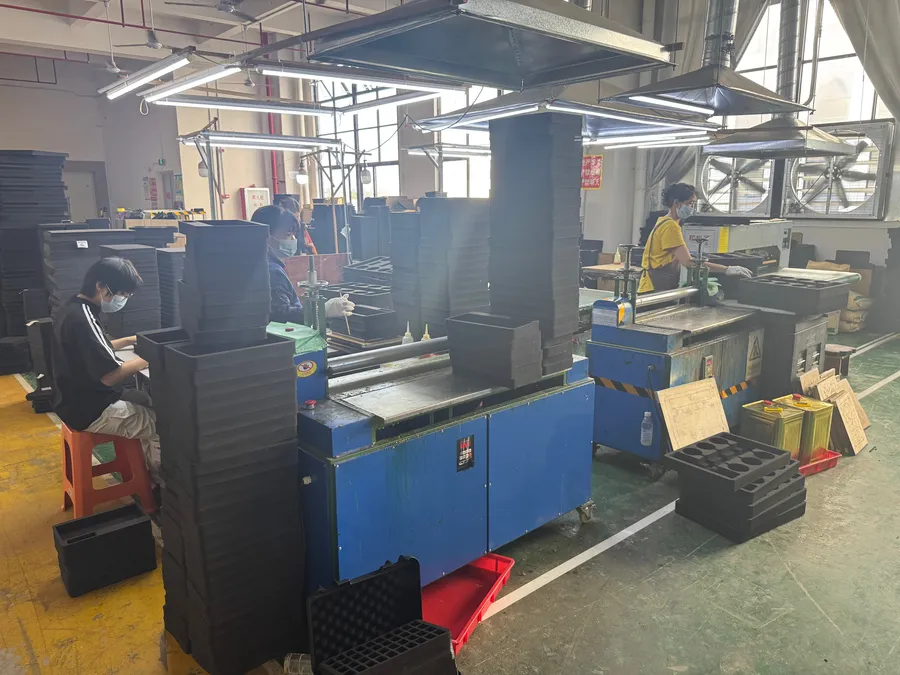
Everything described above is configurable on a standard shell: interior layout (pick-and-pluck, die-cut or CNC-cut), foam grade and thickness, colour, logo method, latch and lock count, pressure-equalisation valve, cable ports, document holder and identification plate. A bespoke exterior geometry requires a new mould — 125 days, from 3,000 units per moulded component.
Procurement considerations
| Question | What to send us |
|---|---|
| Which shell fits? | Equipment L × W × H as packed, plus required clearance per axis |
| What does it cost? | Order quantity and estimated annual quantity — the two drive different answers |
| Is tooling needed? | Whether an existing shell clears the envelope with usable foam depth |
| Lead time? | Your required delivery date, not just the order date |
| Certification? | The exact standard your tender names — we will say whether we can test to it |
| Freight? | Destination and preferred terms; carton and pallet data supplied with the quotation |
Comparison and selection guide
The tables on this page exist because a protective case is chosen by comparing three things: the envelope, the environment and the handling chain. Where no table applies, the rule below is.
| Situation | What To Do |
|---|---|
| Fastest | Standard shell plus CNC foam — typically 45 days from approved drawing. |
| Branded | Standard shell plus custom colour and logo — MOQ applies to the resin colour. |
| Bespoke geometry | New mould — 125 days, MOQ from 3,000 units per component. |
- Size on internal dimensions plus clearance, never on a product name.
- Choose the carrying method before the shell: it changes the series, not just the price.
- Specify the interior last, and decide up front whether the end user will reconfigure it.
Can case weight be customised for a specific piece of equipment? relates to Logistics & Packing Guide. Related families: Custom Protective Cases / Equipment Transport Cases / Military Protective Cases / Electronics Cases / Rolling Cases. Related sectors: field and industrial equipment. Continue in the Logistics & Packing Guide cluster.
This page is written from our own production data. If your requirement differs, send the dimensions and we will tell you which of the 155 models fits, or whether a custom route is needed.


